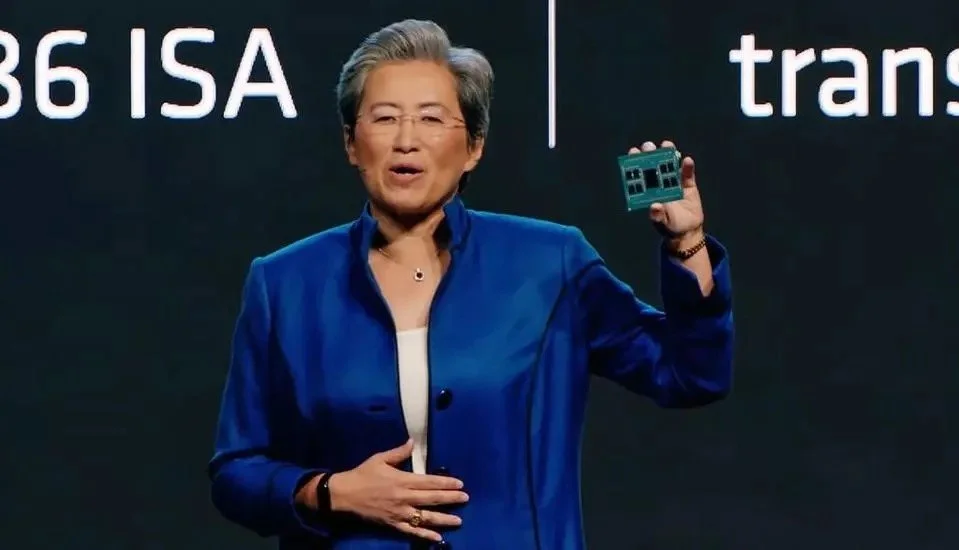
This morning, AMD marked yet another milestone with the announcement of its new Versal Premium VP1902 adaptive SoC (System On Chip) products. Semiconductor chip design is challenging and expensive. As such, there’s a lot of emulation, prototyping and verification work that goes into designing the next greatest processor, accelerator or platform product, and that’s where FPGAs (Field Programmable Gate Arrays) come in. You can think of FPGAs as both a virtual and physical sandbox for chip engineers to work in and emulate their designs in pre-production silicon, before committing to sending them out to expensive tape-out and chip fab processes for production ASIC (Application Specific IC) designs.
Read MoreAn ergonomic workspace is vital for comfort and long-term employee health. A poorly optimized setup can result in increased fatigue, loss of focus, or even potential injuries. A worker’s comfort and ergonomic needs, however, can vary over time, often as frequently as multiple times a day for different activities. As such, it is important for elements such as the keyboard, mouse, monitor(s), and chair to be as adjustable as possible.
Read MoreToday, at its Data Center and AI Technology event in San Francisco, Advanced Micro Devices (AMD) announced the availability of its 4th Gen EPYC data center processor expansion based on the company’s Bergamo and Genoa-X CPU architectures for cloud-native, general-purpose compute and HPC (High Performance Computing) workloads, respectively. The company also announced it will sample its new Instinct MI300X AI accelerator later this year, along with its Infinity Architecture platform that incorporates up to eight MI300X accelerators together for complex AI inferencing and training workloads.
Read MoreHigh-End Smartphone Camera Systems Require Massive Processing Power
Read MorePC gaming is big business these days, from eSports to game streaming, and the lion’s share of the unit volume in the GPU market is delivered at price points south of $400, driving display resolutions at 1080p. This is the target gamer demographic that Nvidia’s recent GeForce RTX 4060 Ti is aimed to address, and this week AMD launched an even more budget-friendly offering of its own with the new Radeon RX 7600, that drops in at just $269…
Read MoreThe PC gaming market is big business these days, and hard core gaming enthusiasts love burly, flagship graphics cards that are frankly too expensive for most mainstream consumers.
Read MoreQualcomm was able to get Stable Diffusion running on a hand-held device without internet connectivity, by optimizing and scaling the AI model down to run on more efficient INT8 (8-bit integer) precision operations, rather than the larger, more complex FP32 (32-bit floating point) operations that were used to train the model. The result is that for inference (running the model to accurately create the image and inferring details from text), the Stable Diffusion model was shrunk dramatically, or quantized, to a fraction of its size with little to no degradation in accuracy, but with significantly better performance on a low-power Snapdragon AI accelerator (Qualcomm Hexagon Processor) with much less storage and memory bandwidth required.
Read MoreAt this moment in time, there are a myriad of resolution upscaling technologies available across the console, mobile and PC gaming markets. NVIDIA offers DLSS (Deep Learning Super Sampling), AMD offers FSR (FidelityFX Super Resolution), Intel has XeSS (Xe Super Sampling), and there are a number of more basic Integer and Bilinear upscaling solutions out there as well, not to mention simplified scaling tools integrated directly into some game engines.
Read MoreThe reality of trillion transistor chips is something that Dr. Anirudh Devgan of Cadence Design Systems feels is attainable by the year 2030, though he and his company have a vision of bringing the power of simulation, modeling and computational software to far more than just semiconductor chip design.
Read MoreSome estimates claim the global video streaming market was valued at over $89 billion in 2022, with expectations that it would expand at a compound annual growth rate (CAGR) of 21.5% between now 2030. As the industry expands, the demand for servers and appliances purpose-built to handle the workloads and optimize for latency, bandwidth, density and power will commensurately expand as well.
Read MoreAt its longstanding SNUG (Synopsys Users Group) Conference, currently underway at the Santa Clara Convention Center in California, Synopsys unveiled powerful additions to its AI-enhanced Electronic Design Automation (EDA) tools suite, with new solutions for functional verification and silicon testing, aptly named Synopsys VSO.ai and Synopsys TSO.ai, respectively. VSO.ai and TSO.ai join the company’s existing DSO.ai to complete what Synopsys is calling Synopsys.ai for chip design.
Read MoreWhile virtually all of the industry is buzzing about AI, accelerated computing and AI powerhouse NVIDIA has just announced a new software library, called cuLitho, that promises an exponential acceleration in chip design development times, as well as reduced chip fab data center carbon footprint and the ability to push the boundaries of bleeding-edge semiconductor design. In fact, NVIDIA cuLitho has already been adopted by the world’s top chip foundry, TSMC, leading EDA chip design tools company Synopsys and chip manufacturing equipment maker ASML.
Read MoreIntel made a couple of announcements this morning that relate to its leadership teams across multiple groups within the company. First, on a more positive note, Intel has appointed Stuart Pann to Lead Intel Foundry Services. Pann, whose title will be senior vice president and general manager of Intel Foundry Services (IFS), will report to Intel CEO Pat Gelsinger.
Read MoreDevice convergence is an ongoing effort for many in the tech sector. Perhaps the biggest opportunity is to seamlessly connect our PC and mobile computing experiences, such that our devices all interoperate with a base level of functionality with as little friction as possible. In short, various mobile and client PC operating systems just need to work together, enabling users full interoperability, and then just get out of the way.
Read MoreFor the last few generations, however, Intel hasn’t updated its HEDT line-up, instead favoring its reinvigorated mainstream segment, which offer massive performance uplifts, thanks to their updated, high-performance hybrid architectures. That is no longer the case though, with the just-introduced Xeon W series.
Read MoreThere’s little question that the average selling price of high-end Android phones has been creeping up over recent years, though this current launch cycle seems to have softened a bit, likely due to the uncertain economic climate. OnePlus has historically lead the charge with respect to bringing top-end “never settle” specs and features to a reasonably-priced flagship offering, though the company’s more recent releases were inching up in price as well.
Read MoreMachine Learning, or what the industry generally refers to as AI, has permeated many industries as a driving force that enables new-found capability and performance, such that it appears as though nearly everything is going “smart.” As I reported in September, even semiconductor chip design itself is being optimized with AI, and it’s making big strides in design efficiency for next-gen chip tech. Electronic Design Automation tools (EDA) bellwether, Synopsys, recently chalked up its 100th AI-designed chip tape-out with top industry players like STMicroelectronics, SK Hynix and Microsoft stepping out in endorsement of the company’s DSO.ai.
Read MoreThere’s a silicon slugfest going on right now between AMD (Advanced Micro Devices) and its chief rivals Intel and NVIDIA. If it were not for the continued execution machine that AMD has proven itself to be under the leadership of its CEO, Dr. Lisa Su, one might think this stiff competition is an extremely tall order. But AMD is apparently oblivious, because the company continues a relentless pace of innovation.
Read MoreThe annual Consumer Electronics Show (CES) is ramping up in Las Vegas, and many innovative tech companies are using the event to showcase their products for the coming year in 2023. Nvidia has historically taken advantage of the venue to launch new GeForce graphics card technology for PC gamers, and this year is no exception. Wednesday marks the launch of the new Nvidia GeForce RTX 4070 Ti, a more cost-effective and significantly more energy-efficient variant of the company’s powerful new Ada Lovelace GPU (Graphics Processing Unit) architecture.
Read MoreBack in September last year, I spent some time with Intel at their Innovation event in San Jose, learning about the company’s 13th Gen Core Series desktop processors. I also got a chance to pepper a few key execs about what these new CPU technologies could bring to the company’s laptop platform offerings as well.
Read More