
Industry Coverage
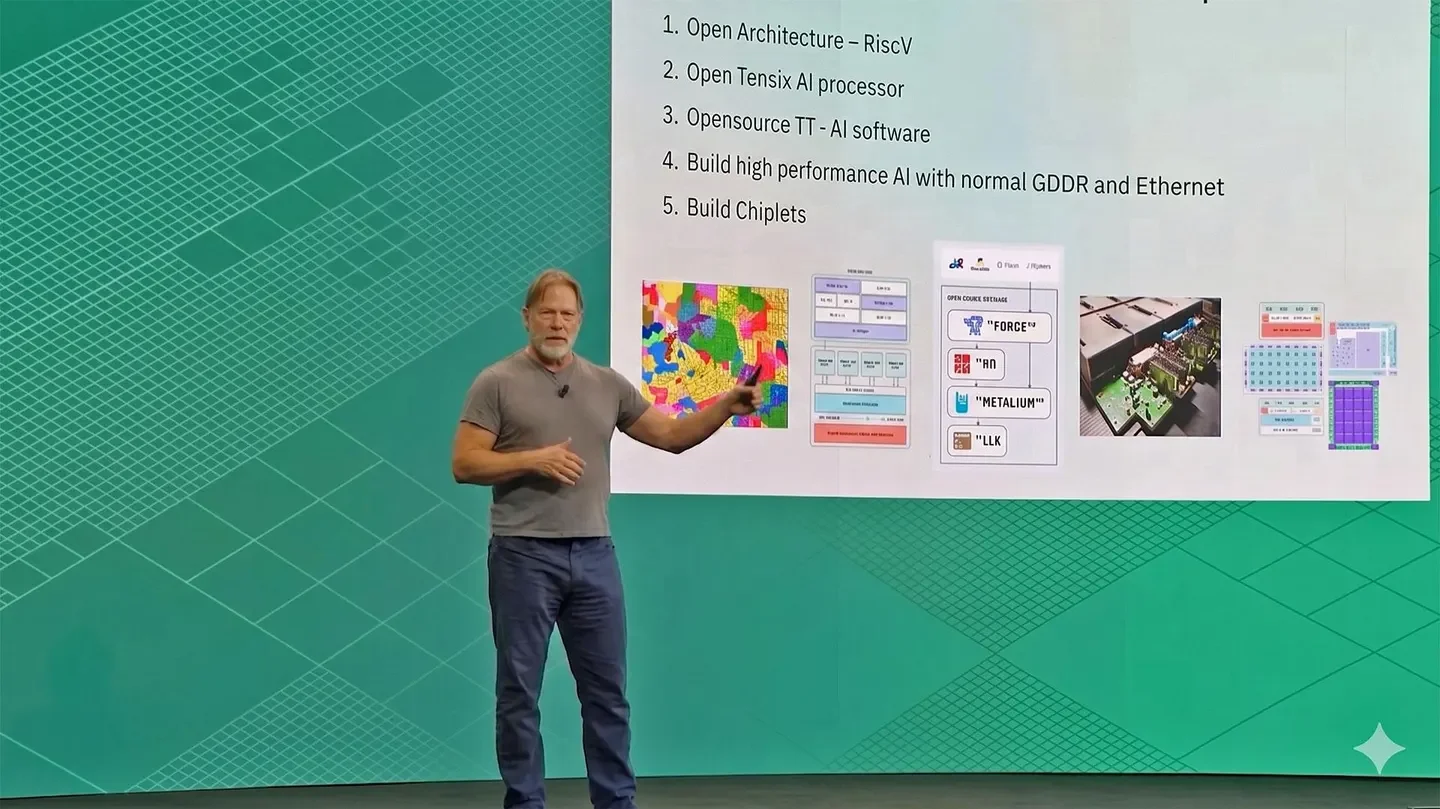
Tenstorrent Unveils Galaxy AI Platform Targeting Scale And Efficiency
Tenstorrent stepped out boldly today in the AI infrastructure space, with the launch of its Galaxy Blackhole system powered by the company’s Blackhole accelerators. And while the company’s highlighted use cases span real-time AI video generation and large-language-model inference, perhaps the more substantive takeaway is architectural. Tenstorrent is positioning Galaxy as a system-level AI platform designed to compete on sustained inference performance, high-speed memory access and scalable networking, three factors that increasingly define real-world AI deployment efficiency.
At a high level, Tenstorrent is making a case that AI infrastructure performance is not determined solely by peak compute throughput.

Cadence Teams With Nvidia And Google To Redefine AI System Engineering
At its annual CadenceLIVE event this week, Cadence Design Systems delivered a pair of announcements that signal an evolution in how the company sees its role in the AI era. One partnership deepens its long-standing relationship with Nvidia around accelerated computing, digital twins and large-scale system simulation. The other integrates Google’s Gemini models into Cadence’s ChipStack AI platform to advance agent-driven design automation in the cloud.
Individually, each announcement is incremental. Collectively, they outline a broader industry shift, where engineering workflows are becoming increasingly agent-orchestrated, simulation-first and tightly coupled to the infrastructure they ultimately run on.

Accelerating Creative Workflows With AI & AMD Ryzen AI 400 Series Laptops
As generative AI tools continue to mature, the practical question for many small businesses and creative professionals isn’t if they should adopt AI, but where it delivers measurable value. In this latest HotTech Vision and Analysis research report, we take a hands-on look at real-world creative workflows, from photo editing and client communications to marketing asset generation, and quantify the productivity impact of modern AI-accelerated PCs.
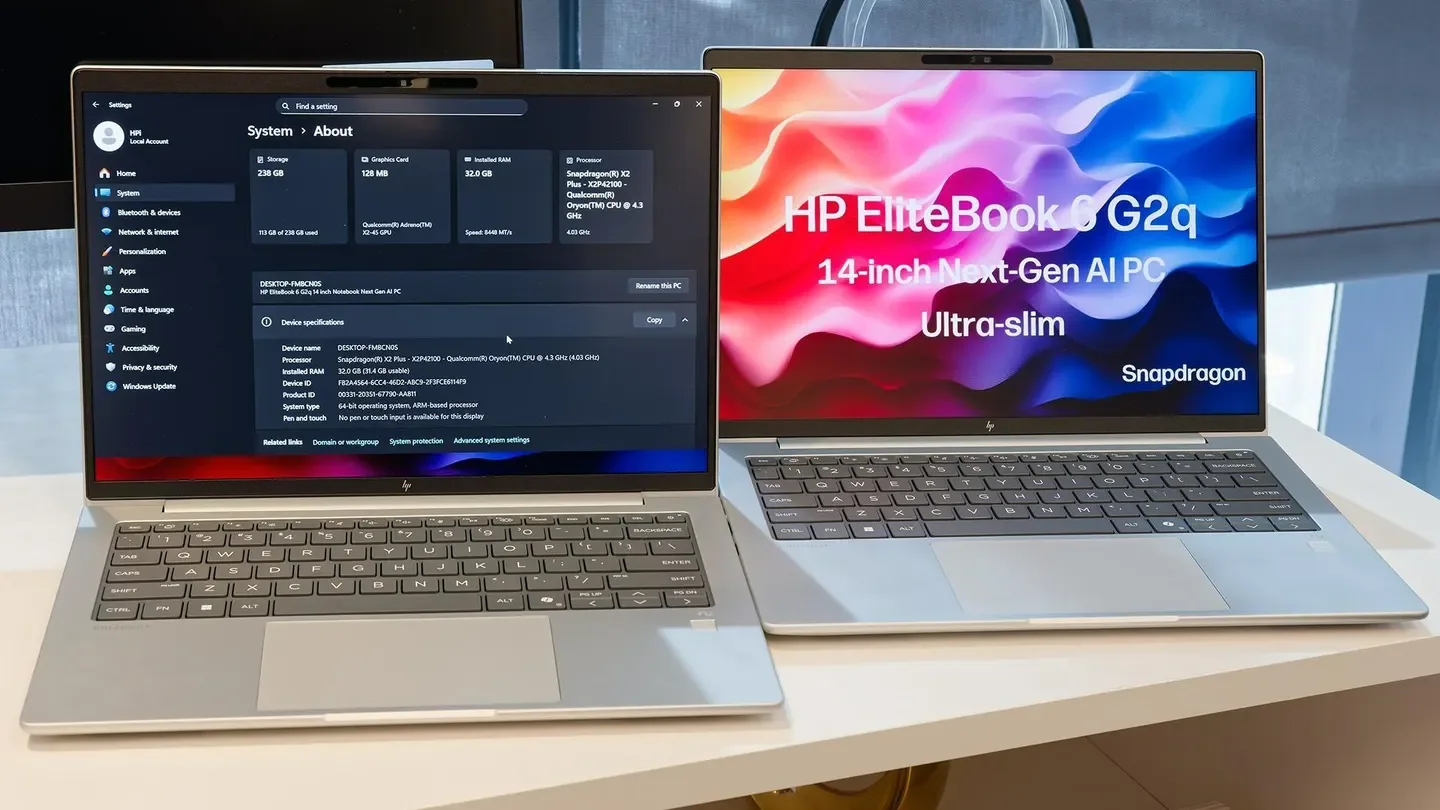
HP Imagine Signals A Shift Toward Smarter, More Connected Experiences
At this week’s Imagine event in New York, HP made a wide range of announcements spanning new hardware, software, and collaboration technologies. As expected, there were many refreshed PCs and workstations aimed squarely at the growing AI PC segment along with a myriad of AI-infused tools and technology. The overarching message, however, wasn’t simply tied to performance or laptop features, though there was a lot of that with over 30 new systems announced.

NVIDIA OpenShell Brings Critical AI Guardrails For Self-Evolving ‘Claws’
While much of the attention around Nvidia’s agentic announcements from GTC centered on its support of the OpenClaw agentic AI platform and the company’s NemoClaw software stack, the OpenShell component of its AI toolkit may ultimately prove to be one of the more important pieces of the puzzle, particularly when it comes to enterprise adoption.
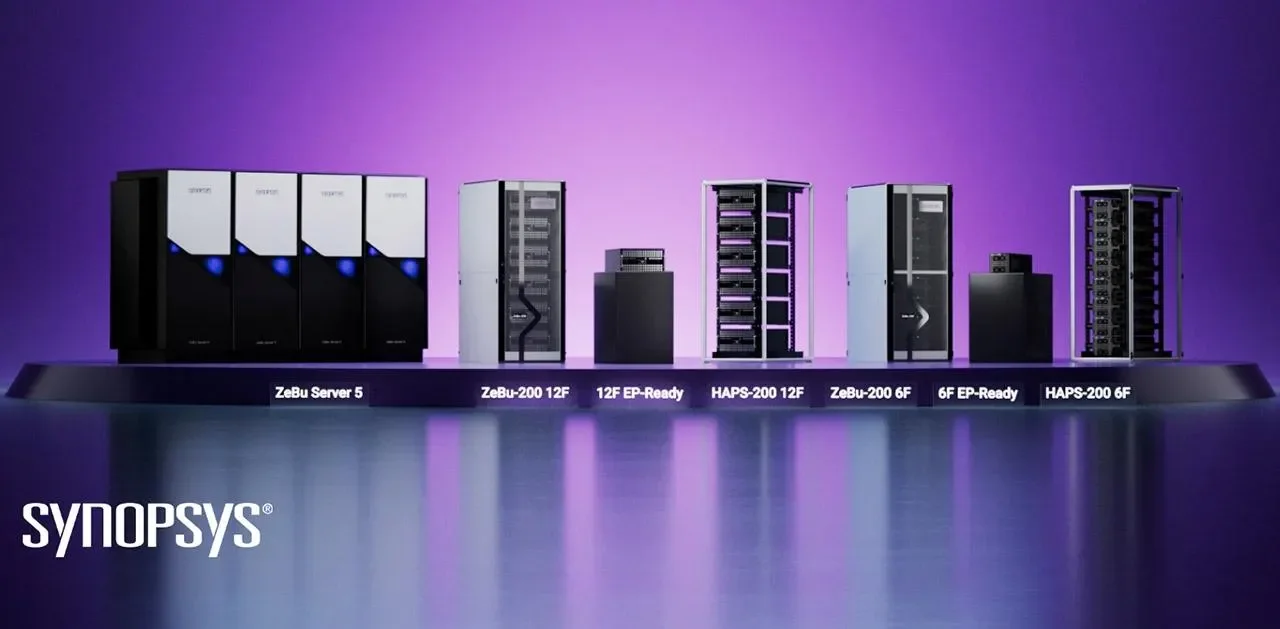
Synopsys Reveals Agentic AI To Speed Next-Gen Chip And System Designs
Earlier in the week, Synopsys announced its Electronics Digital Twin Platform, which is an open solution designed to accelerate the creation, management, deployment, and use of digital twins to help engineers co-design and optimize silicon and software. The Synopsys eDT platform will Initially target automotive use cases to reduce vehicle development cost and speed time-to-market, by allowing customers to configure what Synopsys calls cloud-based eDT Labs. eDT Labs bring together an array of Synopsys technologies, along with open‑ecosystem tools, models, software, and scalable compute, to enable early evaluation of new System-on-Chips or microcontrollers, system validation, and early software development, even before physical hardware is available. And today, at its Synopsys Converge event currently underway in Santa Clara, California, the company announced a wide array of new systems, tools, and initiatives to further accelerate design and integration for a variety of use cases, including, Synopsys AgentEngineer technology, Ansys 2026 R1 and Synopsys Multiphysics-Fusion technology, and new Hardware-Assisted Verification platforms.

Evaluating AI Inference Accelerators For Machine Vision Applications
In a head-to-head battle of AI accelerators, the results are in — and Axelera AI didn’t just win, it ran laps around the competition.

Synopsys To Advance Software Defined Vehicles Via PikeTec Acquistion
The digitization of the modern car or truck has kicked into high gear over the past few years, from Advanced Driver Assistance Systems (ADAS) and Infotainment systems, to ECUs for engine control, PCMs for powertrain control, and more. It’s against the backdrop of this major growth trajectory that EDA (Electronic Design Automation) semiconductor tools bellwether, Synopsys, stepped out today to announce the acquisition of German automotive software testing and verification house PikeTec GmbH, for an undisclosed sum.

Qualcomm Leads Charge With On-Device AI
Qualcomm was able to get Stable Diffusion running on a hand-held device without internet connectivity, by optimizing and scaling the AI model down to run on more efficient INT8 (8-bit integer) precision operations, rather than the larger, more complex FP32 (32-bit floating point) operations that were used to train the model. The result is that for inference (running the model to accurately create the image and inferring details from text), the Stable Diffusion model was shrunk dramatically, or quantized, to a fraction of its size with little to no degradation in accuracy, but with significantly better performance on a low-power Snapdragon AI accelerator (Qualcomm Hexagon Processor) with much less storage and memory bandwidth required.

Cadence CEO Drives Growth Beyond Chip Design With AI And Computational Software
The reality of trillion transistor chips is something that Dr. Anirudh Devgan of Cadence Design Systems feels is attainable by the year 2030, though he and his company have a vision of bringing the power of simulation, modeling and computational software to far more than just semiconductor chip design.

AMD Xilinx Unveils Alveo MA35D Accelerator To Tackle The Demands Of Next-Gen Interactive Digital Content
Some estimates claim the global video streaming market was valued at over $89 billion in 2022, with expectations that it would expand at a compound annual growth rate (CAGR) of 21.5% between now 2030. As the industry expands, the demand for servers and appliances purpose-built to handle the workloads and optimize for latency, bandwidth, density and power will commensurately expand as well.

Synopsys Expands Its AI-Powered EDA Chip Design Tool Suite To Overcome Systemic Complexity
At its longstanding SNUG (Synopsys Users Group) Conference, currently underway at the Santa Clara Convention Center in California, Synopsys unveiled powerful additions to its AI-enhanced Electronic Design Automation (EDA) tools suite, with new solutions for functional verification and silicon testing, aptly named Synopsys VSO.ai and Synopsys TSO.ai, respectively. VSO.ai and TSO.ai join the company’s existing DSO.ai to complete what Synopsys is calling Synopsys.ai for chip design.

NVIDIA cuLitho Computational Lithography Massively Accelerates Chip Design Using GPUs
While virtually all of the industry is buzzing about AI, accelerated computing and AI powerhouse NVIDIA has just announced a new software library, called cuLitho, that promises an exponential acceleration in chip design development times, as well as reduced chip fab data center carbon footprint and the ability to push the boundaries of bleeding-edge semiconductor design. In fact, NVIDIA cuLitho has already been adopted by the world’s top chip foundry, TSMC, leading EDA chip design tools company Synopsys and chip manufacturing equipment maker ASML.

Synopsys AI Chip Design Hits Major Milestone With Azure Cloud, STMicro And SK Hynix
Machine Learning, or what the industry generally refers to as AI, has permeated many industries as a driving force that enables new-found capability and performance, such that it appears as though nearly everything is going “smart.” As I reported in September, even semiconductor chip design itself is being optimized with AI, and it’s making big strides in design efficiency for next-gen chip tech. Electronic Design Automation tools (EDA) bellwether, Synopsys, recently chalked up its 100th AI-designed chip tape-out with top industry players like STMicroelectronics, SK Hynix and Microsoft stepping out in endorsement of the company’s DSO.ai.

Synopsys To Play A Key Role In Enabling Intel Foundry Services For US DOD Chip Program
Late last year, the US Department of Defense (DOD) put in motion a program called RAMP-C (Rapid Assured Microelectronics Prototypes – Commercial). The goal of this program is to help create state-of-the-art commercial semiconductor design, foundry and fabrication services with access for critical DOD systems and infrastructure. In the process, the US DOD awarded Intel an agreement to provide commercial chip foundry services in the first phase of this program. In-turn Intel Foundry Services (IFS) will be working with key partners such as Synopsys.

Qualcomm Stakes Beachhead In Artificial Intelligence With Foxconn Gloria AI Edge Box
Foxconn’s Industrial Internet division has launched a new AI-enabled machine vision platform called Gloria. Powered by Qualcomm’s Cloud AI 100 solution, the system is design to support up to 24 high-definition cameras for video analytics applications like traffic analysis, security monitoring and smart retail spaces.

Measuring AI Performance On Mobile Devices: Why It Matters Now And In The Future
It will be incumbent upon benchmark app developers and the press to sort through the finer points of what makes for a quality mobile AI benchmark, and also what is a truer measure of performance for your own personal pocket AI assistant.

Top Technology Titans That Shaped The Landscape In 2019
Even if you’re not a tech analyst, enthusiast or hyper-connected geek that follows the industry, it was obvious that we’ve achieved major technology milestones in 2019, and the pace of innovation is now accelerating dramatically and in some areas exponentially. Artificial Intelligence (AI) was perhaps the hallmark of technological advancement this year, with its amazing potential that’s both exciting and perhaps even frightening to some.